



Eaton Environmental Monitoring Probe - Gen 2 - environment monitoring device

2514-HW-Eaton-021
Overview
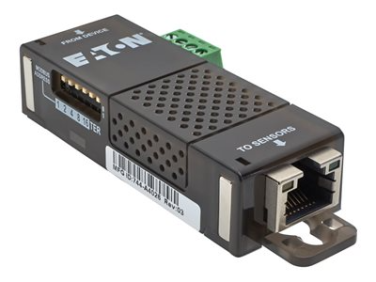
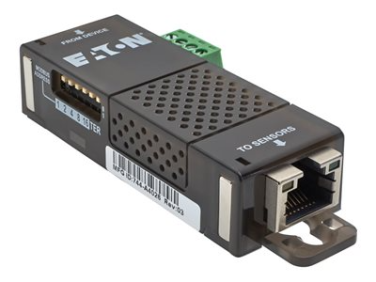
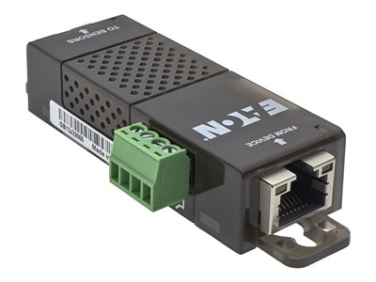
The optional Eaton Environmental Monitoring Probe (EMP) Gen 2 is a connectivity device that enables you to collect temperature and humidity readings in rack enclosures and monitor environmental data remotely using Eaton's power monitoring solutions or a standard web browser. Each EMP provides one temperature, one humidity, and two dry-contact status data points. The EMP Gen 2 features a translucent case and integrated LED to positively identify the status of each sensor at a glance while walking the aisles.
| General | |
| Device Type | Environment monitoring device |
| Width | 1.5 in |
| Depth | 2.3 in |
| Height | 1.2 in |
| Weight | 1.2 oz |
| Networking | |
| Form Factor | External |
| Connectivity Technology | Wired |
| Data Link Protocol | Ethernet, Fast Ethernet, Gigabit Ethernet |
| Expansion / Connectivity | |
| Interfaces | 1 x 1000Base-T - RJ-45 |
| Compatibility Information | |
| Designed For | Eaton 5P 1500 RACKMOUNT |
The EMPDT1H1C2 Environmental Monitoring Probe (EMP) Gen 2 enables you to collect temperature and humidity readings in rack enclosures and monitor environmental data remotely using SNMP or a web browser. It features one temperature, one humidity and two dry-contact status data points. Compatible with select Eaton UPS systems and PDUs, the EMP Gen 2 features a translucent case and integrated LED that lets you identify the status of each sensor at a glance while walking the aisles.
Monitor Status of Up to 6 Contact Devices or Sensors
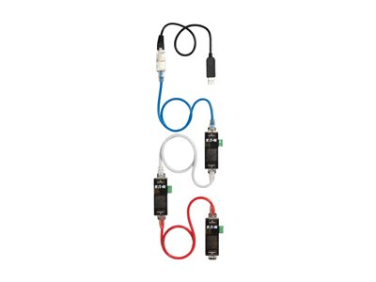
In addition to measuring ambient temperature and humidity at the rack, the EMP Gen 2 can support up to two additional input contact sensor devices per module. Since you can daisy-chain up to three EMPDT1H1C2 probes per host device, you can connect up to six total devices, such as water leak detectors, door contact sensors, vibration sensors and smoke detectors. Receive real-time status of all sensors via SNMP or browser and notifications of alarms via email. You can also create customizable shutdown and load-shedding protocols in case of extended power failures.